
If you love floral, citrusy desserts, then the Persian Love Cake with Lemon and Rosewater Recipe is going to sweep you off your feet. It’s a dreamy almond cake layered with fragrant cardamom, fresh lemon zest, and delicate rosewater—such a lovely treat to share with friends and family.

Jump to:
- Why You'll Love This Recipe
- Ingredients & Why They Work
- Make It Your Way
- Step-by-Step: How I Make Persian Love Cake with Lemon and Rosewater Recipe
- Top Tip
- How to Serve Persian Love Cake with Lemon and Rosewater Recipe
- Make Ahead and Storage
- Frequently Asked Questions:
- Final Thoughts
- Persian Love Cake with Lemon and Rosewater Recipe
Why You'll Love This Recipe
I still remember the first time I made this Persian Love Cake—each bite was like a little escape to a sunny Persian garden filled with lemon blossoms and rose petals. It’s elegant, comforting, and surprisingly easy to pull together once you have the ingredients on hand.
- Unique Flavor Combination: The blend of cardamom, rosewater, and lemon zest makes this cake truly special and fragrant.
- Light and Fluffy Texture: Thanks to almond flour and kefir, the cake layers are moist yet airy.
- Beautiful Presentation: Topped with pistachios and dried rose petals, it looks stunning and festive on any table.
- Simple to Make: With straightforward steps and accessible ingredients, you can easily impress your guests.
Ingredients & Why They Work
Before you start, gather all your ingredients for this cake to ensure a smooth baking experience. Choosing good quality almond flour and fresh lemons makes a noticeable difference in flavor and texture.

- Fine granulated sugar: This helps release the lemon oils when you zest it, creating a fragrant base for the cake batter.
- Lemon zest: The star citrus flavor that brightens the whole cake and shines through the glaze too.
- Unsalted butter: Softened to blend smoothly with sugar and oils, giving richness without salt overpowering the flavor.
- Ground cardamom: Adds warm, fragrant spice that perfectly complements lemon and rosewater.
- Rosewater: Brings that signature floral note essential to Persian desserts.
- Pure vanilla extract: Enhances the overall depth and rounds out the flavor profile.
- Flavorless oil: Keeps the cake moist without interfering with the delicate flavors.
- Fine sea salt: Balances sweetness and highlights the aromatics; halve if you use regular table salt.
- Large eggs: Provide structure and help the batter hold together light and fluffy layers.
- Almond flour: Make sure you use almond flour—not ground almonds or almond meal—for the perfect crumb and texture.
- Sifted cake flour: Keeps the cake tender by limiting gluten development.
- Baking powder: Gives the right amount of lift for a soft, springy cake.
- Kefir or buttermilk: Adds tanginess while tenderizing the crumb and enhancing moisture.
- Powdered sugar (for glaze): Sweetens and smooths the lemon glaze topping.
- Freshly squeezed lemon juice: Provides tartness and brightens the glaze.
- Pistachios, chopped: For an earthy crunch and pretty green contrast as garnish.
- Dried rose petals: Beautiful, fragrant, and a classic Persian decorative touch.
Make It Your Way
One of the best parts about the Persian Love Cake with Lemon and Rosewater Recipe is how easily you can put your own spin on it. Whether you're adjusting flavors or toppings, it's a versatile cake meant to delight your palate and creativity.
- Variation: For a nuttier crunch, I sometimes fold in a handful of chopped pistachios into the batter itself before baking. It adds an extra layer of texture that pairs beautifully with the lemon glaze.
- Dietary tweak: If you want to make it dairy-free, swap the kefir or buttermilk with plain coconut yogurt. The cake turns out tender and fragrant just the same.
- Seasonal twist: Try swapping fresh lemon zest with orange zest for a softer citrus note—perfect for cozy winter gatherings.
Step-by-Step: How I Make Persian Love Cake with Lemon and Rosewater Recipe

Step 1: Waking Up the Aroma—Zesting Sugar
Start by preheating your oven to 325 degrees Fahrenheit and greasing two 8-inch round cake pans. Then, place 300 grams (or 1 ½ cups) of fine granulated sugar in the bowl of your stand mixer. Take the zest of two lemons and grate it directly over the sugar. Using your fingers, rub the zest into the sugar until it feels like wet sand—this little step releases all those fragrant lemon oils that make the cake so special. The scent alone is enough to brighten your morning!
Step 2: Creating the Flavor Base
Next, add 170 grams (¾ cup) softened unsalted butter, 50 grams (¼ cup) flavorless oil, 2 teaspoons ground cardamom, 1 teaspoon rosewater, 1 teaspoon pure vanilla extract, and 1 teaspoon fine sea salt to the sugar and lemon zest mixture. Attach your paddle mixer and beat starting on low speed, gradually increasing to medium. Beat until the mixture becomes light, creamy, and airy—a good 3 to 5 minutes. Don’t forget to scrape down the sides of the bowl to give everything a chance to blend perfectly.
Step 3: Slowly Adding the Eggs
With your mixer running on medium, add the 3 large eggs one at a time, spacing each addition by about 20 to 30 seconds. This slow incorporation helps the batter become smooth and emulsified. After adding all the eggs, scrape down the bowl once more and beat until the mixture is uniform and silky.
Step 4: Combining Dry Ingredients and Kefir
Turn your mixer to low speed and add 145 grams (1 ¼ cup) almond flour, 195 grams (1 ½ cups) sifted cake flour, and 2 teaspoons baking powder. As the dry ingredients start to incorporate, slowly pour in 120 grams (½ cup) kefir or buttermilk. Mix just until everything is combined—overmixing here can make the cake tough, so stop once you see no dry streaks in the batter.
Step 5: Baking the Cake
Divide the batter evenly between the two prepared pans, smoothing the tops with a spatula. The cakes won’t dome very much, but leveling them after baking helps create a tidy finish. Bake in your preheated oven for about 25 minutes, or until a toothpick inserted in the center comes out clean. The kitchen will fill with a beautiful mix of cardamom, lemon, and rosewater—pure magic!
Step 6: Cooling and Leveling
Allow the cakes to cool for 5 minutes in their pans before transferring them to a wire rack. Once completely cool, you can slice off any domed tops with a serrated knife or cake slicer; these cake “hats” make a delicious mid-bake snack! Level layers make it easier to glaze and stack your cake beautifully.
Step 7: Making the Lemon Glaze
In a small bowl, whisk together 260 grams (2 cups) powdered sugar, 3 tablespoons freshly squeezed lemon juice to start, and 1 teaspoon rosewater. Adjust by adding up to 2 more tablespoons of lemon juice if you want a thinner glaze. The goal is a smooth, pourable consistency that’ll gently coat the cake layers without running off.
Step 8: The Grand Assembly
Once the cakes are fully cooled, pour or spread the lemon glaze evenly over the tops and sides. Immediately sprinkle with chopped pistachios and dried rose petals for that elegant, fragrant finishing touch. Let the glaze set for a few minutes before slicing and serving.
Top Tip
These tips will help you get the most out of your Persian Love Cake with Lemon and Rosewater Recipe, ensuring every bite is a perfect balance of fragrant, moist, and beautifully textured.
- Leverage the Lemon Zest: Rubbing the lemon zest into the sugar until it feels like wet sand really releases those bright citrus oils, giving the cake that vibrant lemon aroma that makes it so special.
- Use Almond Flour, Not Almond Meal: I’ve found that using almond flour, instead of ground almonds or almond meal, gives the cake a much lighter crumb and better texture—don’t skip this step!
- Beat Until Light & Airy: Taking the time to cream the butter, sugar, and flavorings properly makes a huge difference in the cake’s fluffiness, so be patient and scrape the bowl as needed for even mixing.
- Don’t Overmix Once Dry Ingredients Are Added: Mixing just until combined keeps the cake tender and avoids that dense, heavy feel—this is one mistake I learned to avoid after a few trials.
How to Serve Persian Love Cake with Lemon and Rosewater Recipe

Garnishes
This cake really shines when topped with crunchy chopped pistachios and delicate dried rose petals that add a splash of color and an elegant floral note. For an extra touch, a few fresh mint leaves or a light dusting of powdered sugar can brighten the presentation even more.
Side Dishes
Serve slices alongside a cup of fragrant Persian tea for an authentic experience, or offer a dollop of lightly whipped cream or a scoop of vanilla bean ice cream to balance the lemony tang. Fresh berries or a small fruit salad can also complement the cake’s floral and citrus notes beautifully.
Make Ahead and Storage
Storing Leftovers
Store your Persian Love Cake covered at room temperature for up to 2 days to keep the texture soft and the glaze fresh. If you want to keep it longer, refrigeration is a good option, just be sure to cover the cake tightly to prevent it from drying out.
Freezing
You can freeze the cooled cake layers wrapped tightly in plastic wrap and then in foil for up to 2 months. Thaw in the refrigerator overnight and apply the lemon glaze and toppings fresh before serving to maintain the best texture and flavor.
Reheating
Bring slices to room temperature before serving for the best flavor. If you prefer it slightly warm, gently heat individual slices in the microwave for 10–15 seconds, but avoid overheating to prevent the glaze from melting off.
Frequently Asked Questions:
Rosewater adds a unique floral character essential to the Persian Love Cake's signature flavor, but if you don’t have any, a small amount of orange blossom water can be a nice substitute. Use sparingly to avoid overpowering the cake.
Kefir or buttermilk adds acidity and moisture, which react with the baking powder to create a tender crumb and slight tang that balances the sweetness, keeping the cake light and fluffy.
Almond flour is finely ground, blanched almonds with the skins removed, giving a smooth texture perfect for delicate cakes. Ground almonds or almond meal often include skins and are coarser, which can make the cake denser.
Use a cake tester or toothpick inserted into the center of the cake; if it comes out clean or with just a few moist crumbs, your cake is perfectly baked. The baking time should be about 25 minutes at 325°F.
Final Thoughts
Making this Persian Love Cake with Lemon and Rosewater Recipe feels like crafting a little edible love letter—every fragrant bite carries a whisper of tradition and warmth. Whether you’re treating yourself or sharing with friends, I hope this cake fills your kitchen with joy and petals of delight as much as it does mine.
Print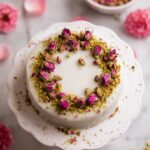
Persian Love Cake with Lemon and Rosewater Recipe
- Prep Time: 20 minutes
- Cook Time: 30 minutes
- Total Time: 50 minutes
- Yield: 1, 8 inch tall cake 1x
- Category: Dessert
- Method: Baking
- Cuisine: Persian
- Diet: Vegetarian
Description
A delicate Persian Love Cake featuring fluffy almond cake layers infused with cardamom, lemon zest, and rosewater, topped with a tangy lemon glaze, pistachios, and dried rose petals for a fragrant and elegant dessert.
Ingredients
Cake Batter
- 300 g or 1 ½ cup fine granulated sugar
- Zest of 2 lemons
- 170 g or ¾ cup unsalted butter, softened
- 2 teaspoons ground cardamom
- 1 teaspoon rosewater
- 1 teaspoon pure vanilla extract
- 50 g or ¼ cup flavorless oil
- 1 teaspoon fine sea salt
- 3 large eggs
- 145 g or 1 ¼ cup almond flour (not ground almonds or almond meal)
- 195 g or 1 ½ cups sifted cake flour
- 2 teaspoons baking powder
- 120 g or ½ cup kefir or buttermilk
Lemon Glaze
- 260 g or 2 cups powdered sugar
- 3-5 tablespoons freshly squeezed lemon juice
- 1 teaspoon rosewater
Toppings
- Pistachios, chopped (for topping)
- Dried rose petals (for topping)
Instructions
- Preheat and Prepare Pans: Preheat the oven to 325 degrees Fahrenheit. Butter and flour two 8-inch round cake pans or spray them with a baking spray.
- Zest Sugar Mixture: Place the sugar in the bowl of a stand mixer and zest the two lemons over it. Rub the lemon zest into the sugar with your fingers until the texture resembles wet sand, releasing the aromatic oils.
- Combine Fats and Flavorings: Add the softened butter, flavorless oil, ground cardamom, rosewater, vanilla extract, and fine sea salt to the sugar mixture. Attach the paddle attachment and beat on low speed, increasing to medium until the mixture is light and airy. Scrape down the bowl as needed during mixing.
- Add Eggs: With the mixer running on medium, add the eggs one at a time, allowing 20 to 30 seconds between each addition. Scrape down the bowl again and beat until smooth and fully incorporated.
- Incorporate Dry Ingredients and Kefir: Reduce mixer speed to low and add almond flour, cake flour, and baking powder. Slowly pour in the kefir or buttermilk while mixing until just combined. Avoid overmixing to keep the cake tender.
- Divide Batter and Bake: Evenly divide the batter between the two prepared cake pans and smooth the tops. Bake in the preheated oven for about 25 minutes or until a cake tester inserted in the center comes out clean.
- Cool Cakes: Allow the cakes to cool in the pans for 5 minutes, then transfer them to a wire rack to cool completely.
- Optional Leveling: Once cool, slice off any domed tops with a cake slicer or serrated knife to create flat layers. Enjoy the trimmed cake tops as a snack.
- Prepare Lemon Glaze: In a small bowl, whisk together powdered sugar, freshly squeezed lemon juice (starting with 3 tablespoons), and rosewater until smooth and pourable. Add more lemon juice if needed to achieve desired consistency.
- Assemble Cake: Pour or spread the lemon glaze over the cooled cake layers, then sprinkle with chopped pistachios and dried rose petals for garnish.
Notes
- Use almond flour, not ground almonds or almond meal, for the best texture in the cake batter.
- If you only have table salt, halve the quantity used to avoid over-salting.
- The lemon glaze can be adjusted in thickness by adding more or less lemon juice depending on your preference.
- Allow the cakes to fully cool before glazing to prevent the glaze from melting.
- Store the cake covered at room temperature for up to 2 days or refrigerate for longer freshness.
Nutrition
- Serving Size: 1 slice (1/12 of cake)
- Calories: 290 kcal
- Sugar: 25 g
- Sodium: 110 mg
- Fat: 18 g
- Saturated Fat: 7 g
- Unsaturated Fat: 9 g
- Trans Fat: 0 g
- Carbohydrates: 28 g
- Fiber: 2 g
- Protein: 5 g
- Cholesterol: 70 mg


Leave a Reply