
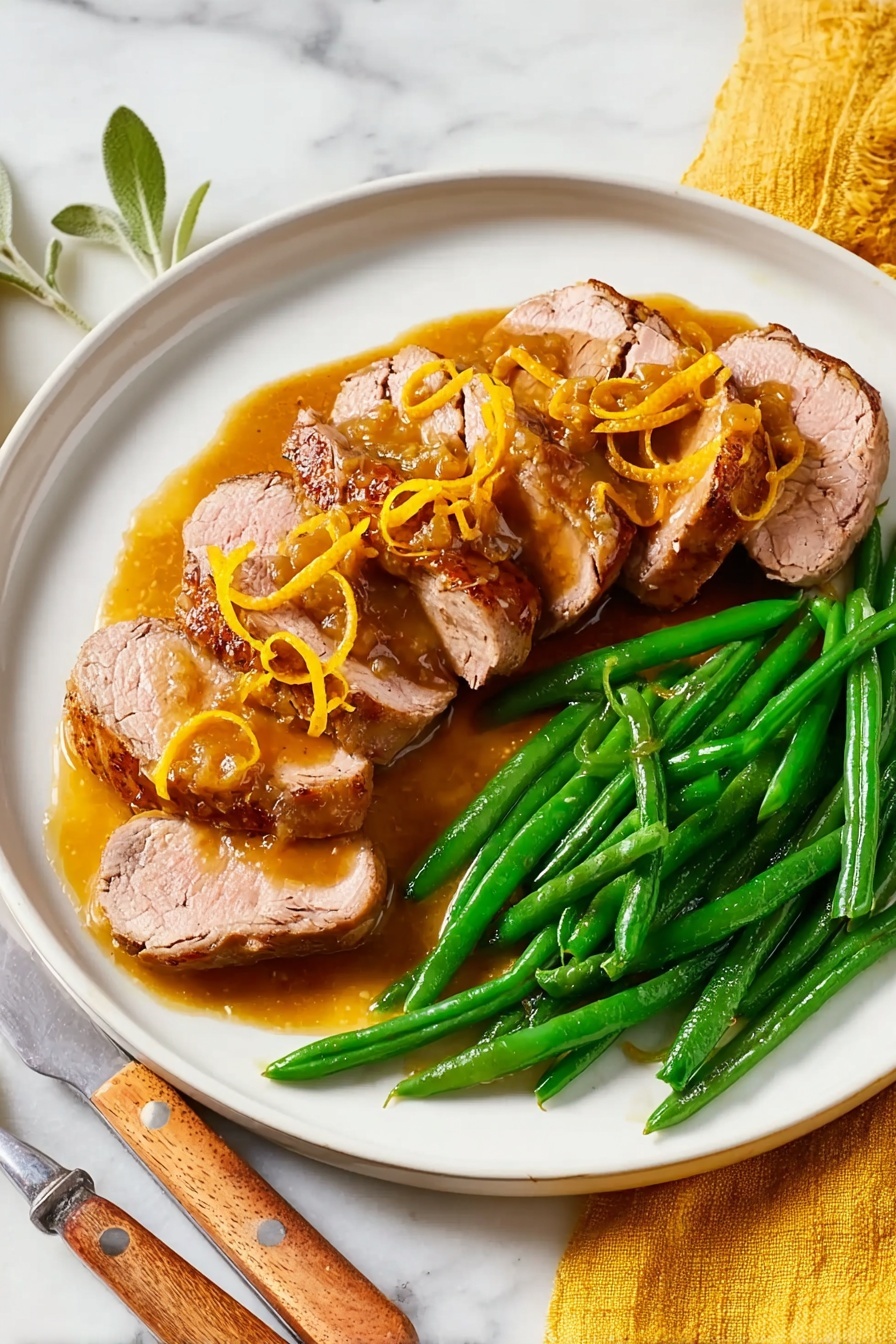
There’s something magical about the balance of rich, crispy duck and bright, tangy orange sauce that makes this Duck à l'Orange Recipe a true classic worth making at home. It’s elegant yet surprisingly approachable, and I love how the flavors just sing together!
Why You'll Love This Recipe
Let me tell you why I keep coming back to this Duck à l'Orange Recipe. It’s all about that perfect harmony—the crisp yet tender duck paired with a citrusy, slightly sweet sauce that just lifts everything up. Plus, it’s easier than you’d think to pull off in your own kitchen.
- Rich yet Refreshing: The duck’s savory richness perfectly balances the zesty orange sauce, making each bite a delight.
- Quick and Elegant: Using duck breasts instead of a whole duck speeds things up without sacrificing flavor or presentation.
- Simple Ingredients: With pantry staples and a touch of marmalade, this feels fancy but stays accessible.
- Impress with Ease: Perfect for date nights or special dinners when you want to wow without stress.
Ingredients & Why They Work
This recipe’s ingredients come together like old friends with each playing their part. I always recommend using the best-quality duck breasts you can find since the meat’s richness drives the dish. The orange components brighten everything up, creating that signature sweet-tart sauce.
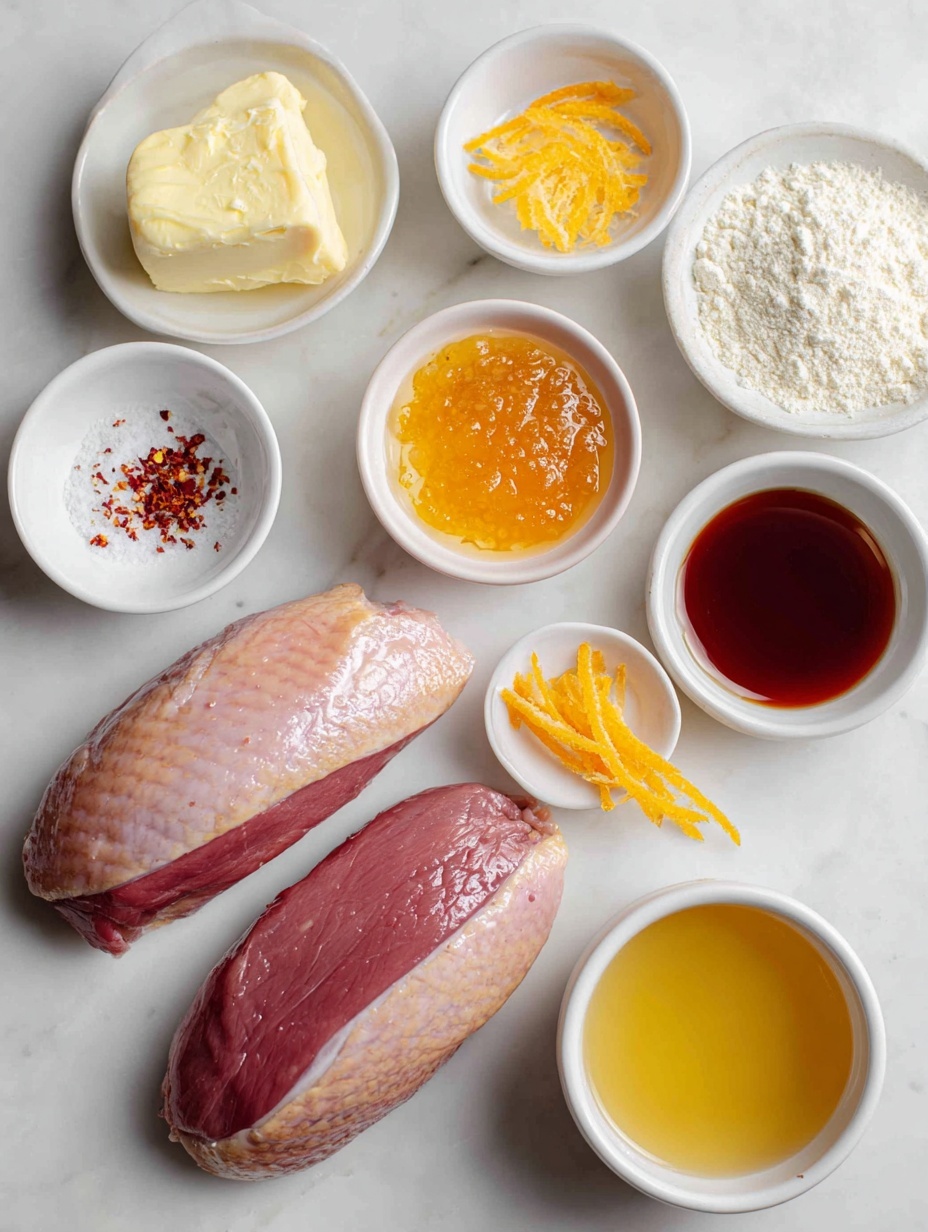
- Duck breast halves: Choose breasts with good fat content for crispy skin and juicy meat.
- Salt: Essential for seasoning and drawing out moisture to get that lovely crisp skin.
- Chicken broth: Adds depth to the sauce’s base without overshadowing the orange flavors.
- Orange liqueur (like Grand Marnier®): Gives an extra fragrant citrus kick that’s truly luxurious.
- Sherry vinegar: Balances the sweetness with a gentle tang; don’t skip it!
- Seville orange marmalade: Adds texture and concentrated orange flavor—Seville marmalade is less sweet, which helps balance the sauce.
- Grated orange zest: Layers in fresh citrus oils for brightness and aroma.
- Cayenne pepper: Just a pinch to subtly warm up the sauce without heat overpowering the dish.
- Reserved duck fat: The secret to crispy, flavorful skin and a luscious pan base for the sauce.
- All-purpose flour: Helps thicken the sauce for that perfect silky texture.
- Butter: Enriches the sauce at the end for a velvety finish and subtle richness.
Make It Your Way
I’m all about making recipes my own, and with this Duck à l'Orange Recipe, you can easily adapt flavors or sides. I often tweak the amount of marmalade to suit my mood, sometimes dialing back for a tarter finish or adding a pinch of cinnamon for an autumn vibe.
- Variation: Once, I added a splash of ginger juice to the sauce—it added a lovely spicy brightness that worked beautifully with the orange.
- Dietary modification: For a lower-sodium version, reduce the salt and use low-sodium chicken broth; the marmalade keeps the sauce flavorful.
- Seasonal changes: Swap Seville marmalade for blood orange marmalade when in season for a sweeter, more floral note.
- Difficulty level: This recipe is beginner-friendly, but if you want a challenge, try rendering the duck fat separately first for an even crisper skin.
Step-by-Step: How I Make Duck à l'Orange Recipe
Step 1: Prep the Duck for Crispy, Juicy Perfection
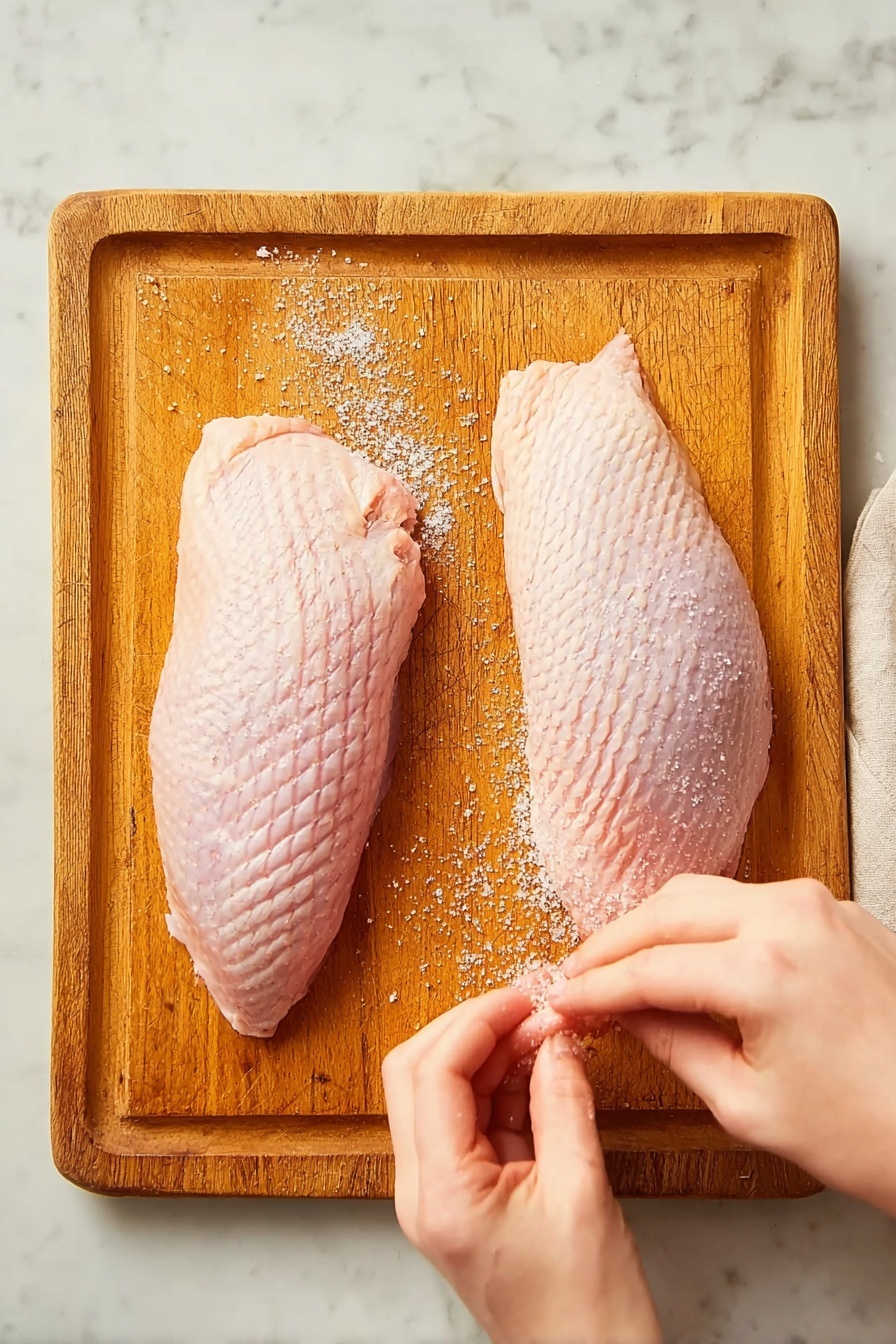
The first thing I do is score the skin of each duck breast in a neat crosshatch—not cutting into the meat but just through the skin and fat. This helps render the fat properly so you get that irresistibly crispy skin—and trust me, the crispy skin is half the fun! After that, I season them generously with salt, rubbing it in well. Then, I let the breasts rest skin-side up at room temperature for about 15 minutes. This little rest is a game-changer for even cooking.
Step 2: Whisk Together the Orange Sauce Components
While the duck rests, I mix up the sauce ingredients—chicken broth, orange liqueur, sherry vinegar, Seville orange marmalade, fresh orange zest, and just a pinch of cayenne. This mixture delivers layers of flavor: sweet, tangy, and a slight warmth from the cayenne. Keep it nearby—you’ll use it soon to transform your pan drippings into sauce magic.
Step 3: Cook the Duck Skin-Side Down
Patting the duck dry helps achieve crispy skin, so I make sure to dab thoroughly with paper towels before seasoning the skin one more time. I heat reserved duck fat in a heavy skillet over medium heat for a couple of minutes, then carefully place the duck breasts skin-side down. This step takes about 6 minutes, and patience is key. You want the fat to render and the skin to brown beautifully without burning—look for deep golden color and hear that satisfying sizzle!
Step 4: Flip and Finish Cooking to Juicy Perfection
After the skin crisps up, I flip the breasts to cook the other side for about 4 minutes more. I aim for the center to be reddish-pink and juicy—use an instant-read thermometer if you like, targeting about 140°F (60°C). Once done, I transfer them to a plate to rest while I make the sauce. This keeps the juices locked in.
Step 5: Make the Orange Sauce in the Duck Pan
With the skillet back on medium heat, I whisk in flour and cook it for about a minute to get rid of that raw flour taste. Then I pour in the orange sauce mixture and bring it to a boil. Give it a few minutes to reduce and thicken until it reaches a luscious consistency. Lower the heat, then stir in butter until it’s fully incorporated—this final step gives the sauce a rich, smooth finish. Taste and adjust salt as needed.
Step 6: Slice, Plate, and Pour That Gorgeous Sauce
I slice the duck breasts across the grain into thin, elegant pieces. I arrange them on a warm plate and generously spoon over the beautiful orange sauce. For a little extra flair, I love garnishing with thin orange zest strips—it adds a fresh burst of color and fragrance right before serving.
Top Tip
I’ve learned a few tricks from multiple attempts that really make this Duck à l'Orange Recipe shine—these tips will help you get chef-level results without stress.
- Patience with skin crisping: Don’t rush the duck skin cooking—medium heat and a good 6 minutes skin-side down are your friends for that golden crisp.
- Save the duck fat: Rendering the fat carefully gives you enough to cook the sauce base and adds incredible flavor—you’d be surprised how much rich fat you get!
- Don’t skip the resting step: Letting the duck rest after cooking keeps the slices juicy and tender rather than dry.
- Whisk in the flour well: Make sure to fully incorporate the flour with the fat before adding liquids so the sauce thickens evenly without lumps.
How to Serve Duck à l'Orange Recipe
Garnishes
I always keep it simple with garnishes—thin strips of fresh orange zest add just the right pop of color and fragrance without overpowering the dish. Occasionally, I throw on a sprig of fresh thyme or a few pomegranate seeds when I want to impress guests with a splash of elegance.
Side Dishes
For sides, I love serving this Duck à l'Orange with classic roasted baby potatoes and green beans almondine. The earthy potatoes soak up the sauce beautifully, and the green beans add a crisp, fresh contrast to the rich duck. You could also try creamy mashed sweet potatoes for a cozy twist.
Creative Ways to Present
When I serve this dish for special occasions, I sometimes fan out the sliced duck on each plate and drizzle the sauce artistically, finishing with microgreens or edible flowers for a fancy touch. Using white or black plates really makes the orange sauce pop visually.
Make Ahead and Storage
Storing Leftovers
I usually put leftover duck slices and sauce in an airtight container in the fridge right away. The flavors actually meld nicely overnight, making it a delicious lunch the next day. Just keep the components together to avoid drying out.
Freezing
I’ve frozen leftover duck and sauce separately with decent results—the sauce freezes well, but the duck meat can get a bit rubbery if over-frozen. If you plan to freeze, slice the duck first and freeze in portions, so you only thaw what you need.
Reheating
To reheat, I warm the sauce gently on the stovetop while warming the duck slices in a hot skillet for 1-2 minutes to revive that crispy texture. Avoid microwaving if you can—it tends to dry out the meat.
Frequently Asked Questions:
You certainly can, but it’s a more involved process requiring longer cooking times and careful handling to render all the fat. Using duck breasts is a great shortcut to get the same rich flavor and crisp skin with less fuss.
You can use regular orange marmalade, but the Seville variety has a slightly tart, less sweet flavor that works best here. If you only have regular marmalade, consider adding a little extra sherry vinegar to add acidity for balance.
The best way is to use an instant-read thermometer and aim for about 140°F (60°C) in the thickest part of the breast for medium-rare. The meat should be a rosy pink inside, juicy but not bloody. With practice, you’ll get a feel for the timing.
Yes, you can make the orange sauce a few hours ahead and gently reheat it before serving. Just be sure to stir in the butter again when warming to restore the silky texture. Keeping it fresh just before plating always tastes best, though.
Final Thoughts
This Duck à l'Orange Recipe holds a special place on my table because it’s the kind of dish that feels luxurious yet never intimidating. Every time I make it, I get excited about that crispy skin and warming orange sauce that never fails to impress. If you're looking to treat yourself or your guests to something memorable, give this recipe a try—you might find it becomes one of your favorites, too!
Print
Duck à l'Orange Recipe
- Prep Time: 15 minutes
- Cook Time: 20 minutes
- Total Time: 35 minutes
- Yield: 2 servings 1x
- Category: Main Course
- Method: Stovetop
- Cuisine: French
Description
Duck à l'Orange is a classic French dish featuring tender duck breasts cooked to juicy perfection and served with a tangy, sweet orange sauce. This recipe uses duck breasts instead of a whole duck for quicker preparation while maintaining rich, savory flavors balanced by the citrusy sauce.
Ingredients
Duck
- 2 duck breast halves
- Salt to taste
- 1 tablespoon reserved duck fat
- 1 teaspoon all-purpose flour
- 1 tablespoon butter
Orange Sauce
- 1 cup chicken broth
- 2 tablespoons orange liqueur (such as Grand Marnier®)
- 1 tablespoon sherry vinegar
- 1 tablespoon Seville orange marmalade, or more to taste
- 2 teaspoons grated orange zest
- 1 pinch cayenne pepper
Instructions
- Prepare Duck: Score the duck skin diagonally in a crosshatch pattern, nearly through the skin and fat. Generously season both sides with salt and rub into the meat. Let the duck breasts rest skin-side up at room temperature for 15 minutes.
- Make Orange Sauce Mixture: In a small bowl, whisk together chicken broth, orange liqueur, sherry vinegar, Seville orange marmalade, grated orange zest, and cayenne pepper until well combined.
- Dry and Re-season Duck: Pat the duck breasts dry with paper towels and season the skin side again with salt to ensure crispness during cooking.
- Cook Duck Skin Side Down: Heat reserved duck fat in a heavy skillet over medium heat for 2 minutes. Place duck breasts skin side down and cook until the fat renders and the skin becomes crisp, about 6 minutes.
- Cook Duck on Other Side: Flip the duck breasts and continue cooking for about 4 minutes until the meat firms up and remains reddish-pink and juicy inside. Use an instant-read thermometer to check for 140°F (60°C) for medium doneness. Remove from skillet and let rest on a plate. Pour any rendered fat into a glass jar for later use.
- Make Sauce: Return skillet to medium heat, whisk in flour and cook for 1 minute until integrated. Pour in the orange sauce mixture and bring to a boil, cooking until thickened and reduced, about 3 to 5 minutes. Reduce heat to low, then stir in butter until melted and sauce is smooth. Season with salt to taste.
- Serve: Slice duck breasts across the grain, arrange on a serving plate, and spoon the orange sauce over the top. Garnish with thin strips of orange zest if desired. Serve immediately and enjoy.
Notes
- Using duck breasts instead of a whole duck reduces cooking time and simplifies the recipe while still delivering rich flavors.
- Score the skin deeply but carefully to avoid cutting into the meat, which helps render fat and achieve crisp skin.
- An instant-read thermometer ensures the duck is perfectly medium, juicy, and safe to eat.
- Seville orange marmalade gives authentic tangy flavor; if unavailable, use regular orange marmalade with a splash of lemon juice for acidity.
- Rendered duck fat can be saved and reused for roasting or frying to add rich flavor to other dishes.
Nutrition
- Serving Size: 1 serving
- Calories: 354 kcal
- Sugar: 12 g
- Sodium: 593 mg
- Fat: 21 g
- Saturated Fat: 8 g
- Unsaturated Fat: 0 g
- Trans Fat: 0 g
- Carbohydrates: 15 g
- Fiber: 0 g
- Protein: 20 g
- Cholesterol: 130 mg

Leave a Reply