
There's something so comforting about tender chicken mingling with sweet bell peppers in a luscious white wine sauce. This Chicken and Peppers in White Wine Sauce Recipe has an old-world charm that makes any meal feel special, especially when shared with family or friends.

Jump to:
- Why You'll Love This Recipe
- Ingredients & Why They Work
- Make It Your Way
- Step-by-Step: How I Make Chicken and Peppers in White Wine Sauce Recipe
- Top Tip
- How to Serve Chicken and Peppers in White Wine Sauce Recipe
- Make Ahead and Storage
- Frequently Asked Questions:
- Final Thoughts
- Chicken and Peppers in White Wine Sauce Recipe
Why You'll Love This Recipe
I have to say, this dish holds a special place in my heart because it’s both elegant and approachable. The flavors develop so beautifully, and it’s one of those recipes where patience really pays off with deep, rich sauce and tender chicken.
- Simple Ingredients: You only need a handful of pantry staples and fresh produce to create something impressive.
- Slow-Cooked Flavor: The gentle simmer melds the chicken and peppers together into a harmonious, fragrant dish.
- Versatile Serving: It pairs perfectly with crusty bread, pasta, or creamy polenta – you get to choose your favorite base.
- Comforting Yet Light: Despite the rich sauce, the recipe feels fresh and not overly heavy thanks to the white wine and veggies.
Ingredients & Why They Work
Each ingredient in this Chicken and Peppers in White Wine Sauce Recipe plays a key role. The balance between the savory chicken, sweet peppers, and tangy white wine sauce creates a dish that’s both comforting and vibrant. Here’s why I love them all:

- Chicken Pieces: I prefer bone-in pieces because they give extra flavor and stay juicy.
- Bell Peppers: Using a mix of colors (red, yellow, orange) adds sweetness and visual appeal.
- Onion: Adds sweetness and depth when it softens and breaks down in the pan.
- Garlic: Brings a subtle aromatic warmth that’s essential but not overpowering.
- Extra Virgin Olive Oil: For richness and a beautiful depth of flavor without heaviness.
- Dry White Wine: The star for that bright acidity and subtle complexity in the sauce.
- Tomato Passata: Smooth and fresh, it melds perfectly with the wine and peppers to make a silky sauce.
- Salt & Black Pepper: Essential for seasoning — I always taste and adjust near the end for balance.
Make It Your Way
This Chicken and Peppers in White Wine Sauce Recipe is a perfect canvas to tweak according to your taste — that’s part of the fun. I’ve tried adding my own twists, and it always feels like making the dish truly mine.
- Variation: Sometimes, I swap out the white wine for chicken broth and a splash of lemon juice when I want a lighter, alcohol-free version that still bursts with flavor.
- Spicy Kick: Adding a pinch of red pepper flakes with the onions gives the sauce a delightful warmth that I adore on chillier evenings.
- Herb Boost: Toss in fresh thyme or rosemary during the simmer to add an earthy aroma that complements the peppers beautifully.
Step-by-Step: How I Make Chicken and Peppers in White Wine Sauce Recipe

Step 1: Prepping the Chicken and Veggies
First things first — I like to give the chicken pieces a little love by trimming any loose skin or tiny feather quills. It’s mostly about preference, but it helps the dish look neat and keeps textures pleasant. Patting the chicken dry with paper towels is a must here because it stops the oil from popping and helps achieve a nice golden-brown crust when you sauté.
Step 2: Slicing Onions and Peppers
While the chicken is drying off, I peel the onion and slice it thinly. Washing and deseeding the peppers is a breeze — I usually cut them in half, remove the membranes, then slice into thick strips. This way, the peppers keep their texture during cooking but still get tender and sweet.
Step 3: Browning the Chicken
Heating extra virgin olive oil over medium-high heat, I add the chicken pieces and let them brown thoroughly on all sides. This step takes about 10–15 minutes, but I never rush it — those golden edges add invaluable flavor to the final dish.
Step 4: Cooking Onions and Garlic
Once the chicken looks beautifully seared, in go the sliced onions and peeled garlic cloves. I cook these for about 5 minutes until the onions soften and start to break down, releasing their sweetness into the pan.
Step 5: Deglazing with White Wine
Time for the magic: pour in the dry white wine. I love watching it bubble up, loosening all the browned bits stuck to the pan (that’s where the flavor hides). I let it bubble away until the alcohol evaporates and the liquid reduces slightly, concentrating the taste.
Step 6: Adding Peppers and Sauce Ingredients
Next, I stir in the sliced bell peppers, tomato passata, salt, and black pepper. It’s important to combine gently here so you don’t break up the chicken but ensure everything is well-coated in that rich sauce.
Step 7: Simmering to Perfection
Reducing the heat to medium-low, I cover the skillet with a lid and let everything simmer slowly for 30–40 minutes, turning the chicken every so often. The low and slow approach lets all those flavors melt together beautifully. If the sauce starts getting too thick or dry, I add a splash of water to keep it saucy without diluting the flavors.
Step 8: Finishing the Sauce
Finally, I remove the lid and keep simmering until the sauce thickens and the excess liquid evaporates, usually about another half hour. Right at the end, I always give it a taste and adjust the seasoning—the peppers’ natural sweetness might mean a little extra salt or pepper is needed to bring everything into perfect balance.
Step 9: Serve & Enjoy!
I serve this Chicken and Peppers in White Wine Sauce piping hot, almost always with crusty bread nearby to soak up that delicious sauce. It never fails to bring everyone to the table with smiles.
Top Tip
From my experience making this dish over several years, getting the sauce just right is all about patience and seasoning. Here are a few tips I swear by:
- Pat Dry the Chicken: This is your best friend to avoid oil splatter and get a beautiful sear.
- Don’t Rush the Browning: Taking your time browning the chicken pieces builds a deep, rich base flavor.
- Watch Your Simmer: A gentle simmer is key — too hot and the chicken can dry out, too cool and the sauce won't develop fully.
- Season at the End: I adjust salt and pepper near the finish to balance the natural sweetness of the peppers with the acidity of the wine and tomato.
How to Serve Chicken and Peppers in White Wine Sauce Recipe

Garnishes
I often sprinkle freshly chopped flat-leaf parsley just before serving to add a pop of color and a fresh, herby brightness that cuts through the sauce’s richness. Occasionally, a few torn basil leaves work beautifully too.
Side Dishes
This recipe shines alongside crusty country bread—perfect for mopping up every last drop of sauce. I also love serving it with creamy polenta or simple buttered pasta. Roasted potatoes or a green salad balance the plate well, making it a complete, comforting meal.
Creative Ways to Present
For special occasions, I’ve plated individual portions in shallow bowls with a nest of roasted garlic mashed potatoes underneath and sauce spooned over the top, garnished with a sprig of rosemary. It elevates the dish, making it look restaurant-worthy without extra fuss.
Make Ahead and Storage
Storing Leftovers
Leftovers keep wonderfully in an airtight container in the fridge for up to 3 days. I always recommend letting the chicken come to room temperature before reheating to help it warm evenly.
Freezing
I’ve frozen this dish a few times without issue—just cool completely before transferring to a freezer-safe container. It freezes well for up to 2 months. Thaw overnight in the fridge before reheating to preserve texture.
Reheating
Reheating gently over low heat on the stove works best to avoid drying the chicken. Add a little splash of water or broth if the sauce thickens too much while warming. Microwave is okay in a pinch but goes best with shorter bursts to keep the sauce from drying out.
Frequently Asked Questions:
Yes, you can use boneless chicken pieces if that’s what you have on hand. Just be mindful that boneless chicken cooks faster and can dry out more easily, so adjust your simmering time accordingly and keep a close eye on it.
A dry white wine like Sauvignon Blanc, Pinot Grigio, or even a dry Chardonnay works beautifully. Avoid sweet or heavily oaked wines as they can overpower the delicate balance of the sauce.
You can adapt this recipe for a slow cooker by browning the chicken and sautéing the onions first, then combining all ingredients and cooking on low for 4-6 hours. However, the sauce may be less thick and the peppers softer, so adjust seasoning before serving.
After the initial simmer with the lid on, removing the lid to continue cooking helps the sauce reduce and thicken. If you notice too much liquid, just increase the heat a bit and stir occasionally until it reaches your desired consistency.
Final Thoughts
I love sharing this Chicken and Peppers in White Wine Sauce Recipe because it’s proof that simple ingredients, given a little time and care, can transform into something extraordinary. Next time you want a dish that's cozy and full of flavor without fuss, give this one a try—I promise it’ll become one of your favorites, too.
Print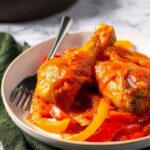
Chicken and Peppers in White Wine Sauce Recipe
- Prep Time: 15 minutes
- Cook Time: 1 hour 30 minutes
- Total Time: 1 hour 45 minutes
- Yield: 4 servings 1x
- Category: Main Course
- Method: Frying
- Cuisine: Italian
Description
This traditional Roman Chicken and Peppers recipe features succulent chicken pieces gently braised with sweet bell peppers, onions, and tomato passata in a flavorful sauce. The dish is slowly simmered to develop rich flavors and is perfect for a relaxed summer meal served hot with crusty bread to soak up the delicious sauce.
Ingredients
Chicken and Vegetables
- 2½ pounds chicken pieces
- 3 bell peppers
- 1 onion
- 2 cloves garlic (or ½ teaspoon garlic powder)
Other Ingredients
- 3 tablespoons extra virgin olive oil
- ½ cup dry white wine
- 1 cup tomato passata
- 1 ½ teaspoons salt
- ¼ teaspoon ground black pepper
Instructions
- Prepare the chicken: Trim any excess skin and remove small feather stubs or quills if desired. Pat the chicken dry thoroughly with paper towels to reduce splattering during frying.
- Prepare the vegetables: Peel and slice the onion. Wash the bell peppers, cut them in half, remove seeds and membranes, then slice into thick strips. Peel the garlic cloves and set aside.
- Brown the chicken: Heat the olive oil in a large frying pan or skillet over medium-high heat. Add the chicken pieces and brown well on all sides, about 10–15 minutes, to build flavor.
- Sauté onions and garlic: Add the sliced onion and whole garlic cloves to the pan with the chicken. Cook for about 5 minutes until the onions soften and start to break down.
- Deglaze with wine: Pour in the white wine and let it bubble up, allowing the alcohol to evaporate and the liquid to reduce slightly.
- Add remaining ingredients: Stir in the sliced bell peppers, tomato passata, salt, and black pepper gently to combine.
- Simmer covered: Reduce heat to medium-low, cover with a lid, and simmer gently for 30–40 minutes, turning the chicken occasionally. Add a splash of water if the sauce begins to dry out.
- Reduce the sauce: Remove the lid and continue simmering, turning the chicken, until the sauce thickens and excess liquid evaporates, about 30 minutes. Taste and adjust seasoning if needed.
- Serve: Serve hot, ideally with crusty bread to soak up the flavorful sauce.
Notes
- This recipe is a classic Roman dish, known for its simple yet satisfying flavors.
- Use dry white wine for deglazing – a dry Sauvignon Blanc or Pinot Grigio works well.
- If you don’t have fresh garlic cloves, ½ teaspoon garlic powder can be substituted.
- To keep the chicken moist, adjust the heat to maintain a gentle simmer throughout cooking and add water if necessary.
- Crusty bread is recommended to enjoy with the saucy dish and soak up the flavorful juices.
Nutrition
- Serving Size: 1 serving
- Calories: 594 kcal
- Sugar: 8 g
- Sodium: 1044 mg
- Fat: 40 g
- Saturated Fat: 10 g
- Unsaturated Fat: 28 g
- Trans Fat: 0.2 g
- Carbohydrates: 15 g
- Fiber: 4 g
- Protein: 38 g
- Cholesterol: 145 mg

Leave a Reply