
There’s something incredibly satisfying about a quick, colorful stir-fry that bursts with flavor and texture, and this Beef Stir-Fry with Vegetables Recipe nails it every time. It’s my go-to when I want a balance of tender beef and crisp veggies, all wrapped up in a savory sauce that hits every note.

Jump to:
Why You'll Love This Recipe
I’ve made this beef stir-fry countless times, and every single time it feels like a cozy, satisfying meal that’s still fresh and exciting. The combination of tender beef with crunchy vegetables and a flavorful sauce makes it a versatile recipe that anyone can master.
- Easy Prep: The marinade softens the beef beautifully, ensuring it’s tender and juicy after just a quick sear.
- Flavor-Packed Sauce: The mix of light and dark soy, oyster sauce, and Shaoxing wine creates depth, without any one flavor overpowering.
- Veggie Variety: Using bok choy, sugar snap peas, and mushrooms adds a nice mix of textures and freshness that keeps every bite interesting.
- Speedy Cooking: From start to finish, this comes together in about 40 minutes, making it perfect for busy weeknights.
Ingredients & Why They Work
Each ingredient in this Beef Stir-Fry with Vegetables Recipe is chosen to build a harmonious balance of tenderness, crunch, and savory goodness. Shopping fresh bok choy and snap peas really elevates the freshness, but feel free to adapt with what’s in your fridge.

- Flank steak: I slice it thinly against the grain to keep the beef tender and easy to bite through.
- Cornstarch: Used in the marinade and slurry to create that signature glossy sauce and help tenderize the meat.
- Neutral oil: Vegetable or canola oil works great here since it withstands high heat without smoking too much.
- Baking soda: A secret weapon that helps break down proteins for super tender beef.
- Bok choy: Adds mild crunch and a touch of sweetness; the stems get nicely tender while the leaves wilt just right.
- Bunashimeji mushrooms: Their firm texture holds up well in stir-fry and adds an earthy flavor.
- Sugar snap peas: They bring a vibrant pop of green and a juicy snap that contrasts beautifully with the beef.
- Soy sauce (light & dark): Light soy adds saltiness; dark soy deepens color and imparts sweetness.
- Oyster sauce: Brings umami richness that makes the sauce truly crave-worthy.
- Shaoxing wine: A splash boosts complexity and helps cut through the richness.
- Garlic & ginger: Classic aromatics that infuse the dish with warmth and freshness.
- Sesame oil: Used sparingly for that toasty nutty note in the sauce.
Make It Your Way
I love how forgiving this recipe is for tweaks. I often swap in whatever veggies are fresh or appealing that week — it’s a perfect framework to personalize and make totally your own.
- Vegetable swap: Tried this with bell peppers and snap peas instead of bok choy? It’s equally delicious and colorful. Just adjust stir-fry times accordingly.
- Protein swap: For a leaner option, I sometimes use sirloin or even chicken breast, though I think flank steak's texture really shines here.
- Spicy kick: Adding some sliced fresh chili or a pinch of chili flakes in the garlic and ginger step gives this a lively heat that I crave on cool evenings.
- Gluten-free tweak: Use tamari in place of soy sauce to keep it gluten-free without compromising on umami.
Step-by-Step: How I Make Beef Stir-Fry with Vegetables Recipe

Step 1: Marinate the Beef
Start by mixing the beef with cornstarch, a bit of oil, water, and baking soda. This little marinade trick is a game changer—it tenderizes the meat beautifully and helps develop a silky texture when cooked. I usually let it sit at least 30 minutes, but if you have time, overnight in the fridge makes it even more tender.
Step 2: Prep Your Vegetables and Sauce
While the beef marinates, chop your bok choy into sizable pieces and get the mushrooms and snap peas washed and drained. Preparing the sauce mixture is next—combining soy sauces, oyster sauce, sesame oil, sugar, and warm water (or stock) makes for that tasty, rich base.
Step 3: Sear the Beef
Get your wok screaming hot—smoking lightly is just what you want. Add some oil around the edges, then spread the beef in an even layer. Sear for 30 seconds on each side so it gets a nice crust, but remember—it’s not fully cooked through yet. Removing it now keeps it tender and prevents overcooking later.
Step 4: Stir-Fry the Aromatics & Vegetables
Add fresh oil and toss in ginger and garlic—let those sizzle together briefly before adding your mushrooms. Give the mushrooms a chance to brown slightly, which adds depth and savoriness. Pour in the Shaoxing wine to lift flavors, then throw in the snap peas and bok choy for a quick, high-heat stir-fry until the greens start wilting just a bit.
Step 5: Bring It All Together
Pour the sauce into the wok, then return the beef to the mix. When you see the sides of the wok getting super hot, stir everything in a circular motion so the beef and veggies evenly touch the wok’s surface. Pour in the cornstarch slurry and toss quickly—this thickens the sauce and makes it cling perfectly to every piece.
Top Tip
From my experience, the magic in this Beef Stir-Fry with Vegetables Recipe really happens with high heat and timing. Stir-frying might seem intimidating, but once you get the hang of quick, hot cooking and staging your ingredients, you’ll have restaurant-quality results at home.
- The Hot Wok Rule: Always preheat your wok until it’s nearly smoking — this ensures a proper sear and keeps the beef from stewing.
- Don’t Crowd the Pan: Cook the beef in batches if needed, or sear it in a single even layer, so it browns evenly without steaming.
- Fast Movements: When you add your sauce and slurry, stir fast so the sauce thickens evenly without clumping.
- Rest After Marinating: The baking soda in the marinade needs time to work its magic; skipping that step means chewier beef.
How to Serve Beef Stir-Fry with Vegetables Recipe

Garnishes
I usually top mine with a sprinkle of toasted sesame seeds and chopped green onions—they add a nice visual pop and a touch of crunch that brightens the dish. If I’m feeling fancy, a drizzle of extra sesame oil right before serving adds that finishing nutty aroma.
Side Dishes
This stir-fry pairs wonderfully with freshly steamed Jasmine rice or brown rice for some nuttiness. On chilly nights, I also like serving it alongside simple stir-fried noodles with a touch of soy and garlic for an even heartier meal.
Creative Ways to Present
For special occasions, I love plating this Beef Stir-Fry with Vegetables Recipe in a shallow bowl, garnished with edible flowers or microgreens to elevate the feast visually. Serving it family-style on a large platter with chopsticks encourages sharing and lively conversation.
Make Ahead and Storage
Storing Leftovers
Leftovers store beautifully in an airtight container in the fridge for up to 3 days. I like to cool the stir-fry completely before sealing it up to avoid sogginess. When reheated, the vegetables hold their crunch better if you give them a quick re-stir in a hot pan.
Freezing
Freezing is possible but not my favorite for this stir-fry since the bok choy and snap peas can lose their texture. If you do freeze it, flash chill first, portion into freezer bags, and thaw gently in the fridge overnight before reheating.
Reheating
I prefer reheating leftovers quickly in a hot skillet or wok, adding a splash of water or stock to refresh the sauce and veggies. Avoid the microwave if you can; stir-frying again helps maintain that fresh, crisp feeling.
Frequently Asked Questions:
Flank steak is ideal because it's lean yet tender when sliced thin and marinated properly. However, you can use sirloin or skirt steak as alternatives. Avoid tougher cuts unless you marinate them longer or slice extremely thin.
If you don’t have Shaoxing wine, dry sherry or a splash of rice vinegar mixed with a little water can work as a substitute. The key is to add some acidity and complexity to the sauce without overwhelming the other flavors.
Absolutely! Swap the beef for firm tofu or tempeh, and replace oyster sauce with a vegan mushroom-based sauce or additional soy sauce. The stir-fry technique and sauce still deliver incredible flavor and texture.
High heat is your best friend here. Stir-fry your vegetables quickly and avoid overcrowding the wok. Also, add the leafy greens towards the end to prevent them from wilting too much. Removing the beef while cooking the veggies helps keep the cooking time short and veggies crisp.
Final Thoughts
Honestly, this Beef Stir-Fry with Vegetables Recipe feels like a warm hug after a busy day. It’s approachable, versatile, and delivers all the great textures and flavors you want from a stir-fry. I hope you enjoy making and eating it as much as I do—I promise it’ll become a staple in your kitchen.
Print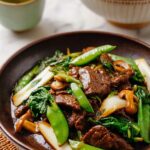
Beef Stir-Fry with Vegetables Recipe
- Prep Time: 30 minutes
- Cook Time: 10 minutes
- Total Time: 40 minutes
- Yield: 3 servings 1x
- Category: Main Course
- Method: Stovetop
- Cuisine: Chinese
Description
This Beef Stir-Fry with Vegetables is a quick and flavorful dish featuring tender flank steak, crisp bok choy, mushrooms, and snap peas, all tossed in a savory soy-based sauce thickened to perfection. Perfect for a satisfying weeknight dinner, it combines delicious textures and vibrant flavors with minimal fuss.
Ingredients
Beef and Marinade
- 12 ounces flank steak, sliced ⅛-inch (3mm) thick into 2-3 inch (6-7cm) pieces
- 1 teaspoon cornstarch
- 2 teaspoons neutral oil (such as vegetable, canola, or avocado oil)
- 1 teaspoon water
- ¼ teaspoon baking soda
Vegetables
- 4 cups bok choy, cut into 1x3-inch (2.5x7.5cm) pieces, washed and drained
- ¾ cup Bunashimeji or Beech mushrooms, washed and drained
- ¾ cup sugar snap peas or snow peas, washed and drained
Sauce
- ½ cup warm water (or beef stock or chicken stock)
- ¼ teaspoon sesame oil
- 2 teaspoons light soy sauce
- 1 teaspoon dark soy sauce
- 1 tablespoon oyster sauce
- ¼ teaspoon sugar
For Cooking
- 3 tablespoons neutral oil (such as vegetable, canola, or avocado oil), divided
- ½ teaspoon minced ginger
- 2 cloves garlic, finely minced
- 1 tablespoon Shaoxing wine
- 2 teaspoons cornstarch, mixed into a slurry with 1 tablespoon water
Instructions
- Marinate the beef: In a bowl, combine the flank steak slices with 1 teaspoon cornstarch, 2 teaspoons neutral oil, 1 teaspoon water, and ¼ teaspoon baking soda. Mix well until the beef is evenly coated. Set aside to marinate for at least 30 minutes or overnight if preparing in advance.
- Prepare the vegetables: Wash and drain the bok choy, mushrooms, and snap peas. Cut the bok choy into 1x3-inch pieces and set all vegetables aside.
- Make the sauce: In a small bowl, whisk together the warm water (or broth), ¼ teaspoon sesame oil, 2 teaspoons light soy sauce, 1 teaspoon dark soy sauce, 1 tablespoon oyster sauce, and ¼ teaspoon sugar until fully combined.
- Heat the wok and sear the beef: Heat a wok over high heat until lightly smoking. Add 2 tablespoons of neutral oil and spread around the wok’s perimeter. Add the marinated beef in a single layer and sear without stirring for 30 seconds. Flip the beef pieces and sear the other side for another 30 seconds, until about 80% cooked. Turn off the heat and remove the beef from the wok.
- Cook the aromatics and mushrooms: Turn the heat back on to high. Add the remaining 1 tablespoon of oil and minced ginger. Stir-fry for 10 seconds, then add the minced garlic and cook for 5 seconds. Add the mushrooms and stir-fry for 15 seconds to give them a good sear. Pour in the Shaoxing wine and stir quickly.
- Add vegetables and sauce: Add the snap peas and bok choy to the wok and stir-fry over the highest heat for about 20 seconds until the bok choy begins to wilt. Stir in the prepared sauce mixture and return the beef to the wok, gathering all ingredients in the center.
- Finish cooking with slurry: Once the mixture comes back to a simmer and the wok sides begin to superheat, stir-fry everything in a circular motion to toss the beef and vegetables against the wok’s sides. Pour the cornstarch slurry into the center while stirring quickly. Cook for another 20 seconds until the sauce thickens and clings well to all the ingredients. Ensure there is no standing sauce.
- Serve: Remove from heat and serve the beef stir-fry immediately, ideally with steamed rice or noodles.
Notes
- For more tender beef, marinate it overnight if time allows.
- Feel free to substitute or add other vegetables like bell peppers, carrots, or broccoli depending on preference and availability.
- Use high heat and a well-seasoned wok for best searing results and flavor development.
- If you don’t have Shaoxing wine, dry sherry or mirin can be used as alternatives.
- Adjust the soy sauce amounts to control saltiness according to taste or dietary needs.
- To keep the dish gluten free, use tamari or a gluten-free soy sauce in place of regular soy sauces and oyster sauce.
Nutrition
- Serving Size: 1 serving
- Calories: 377 kcal
- Sugar: 4 g
- Sodium: 797 mg
- Fat: 23 g
- Saturated Fat: 6 g
- Unsaturated Fat: 17 g
- Trans Fat: 0 g
- Carbohydrates: 12 g
- Fiber: 3 g
- Protein: 29 g
- Cholesterol: 68 mg



Leave a Reply